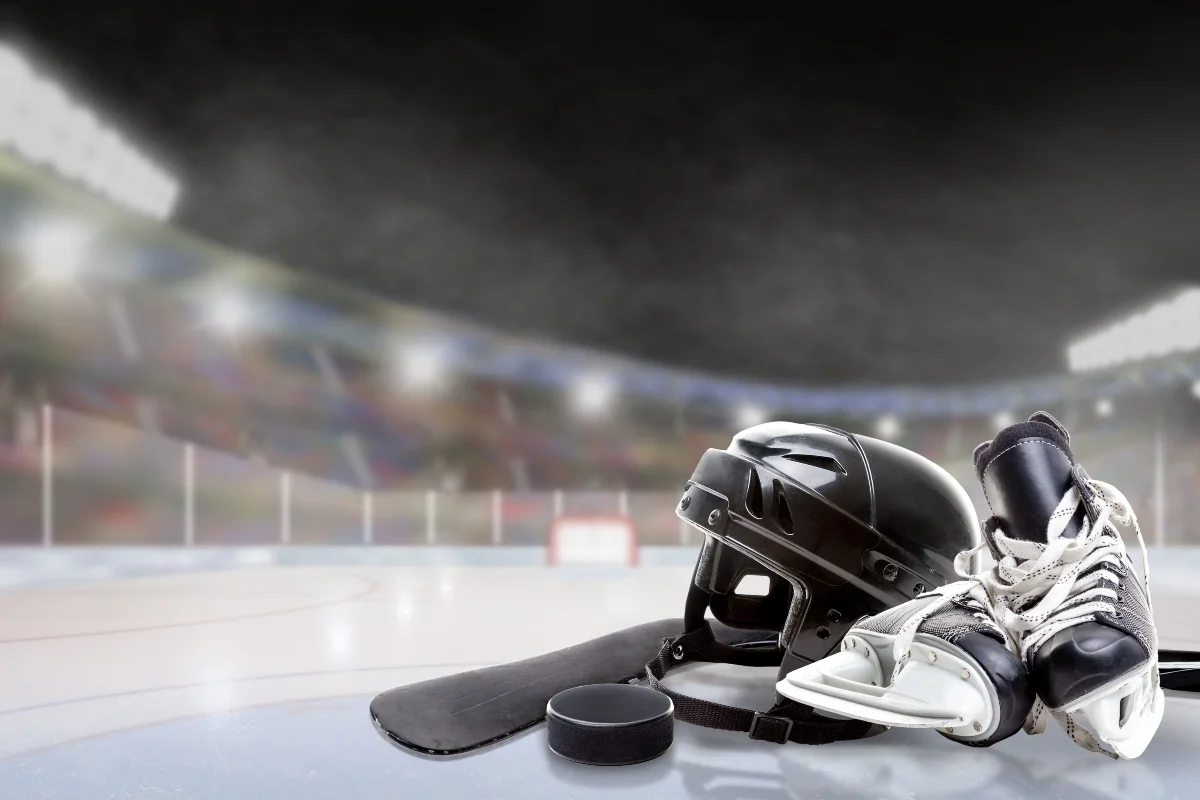
When ice hockey was first played in the late 19th century, gear was primitive at best. Players stepped onto natural frozen ponds wearing leather dress boots fitted with rudimentary steel blades, wooden sticks carved from hickory or ash, and virtually no protective padding.
Over the past 150 years, hockey equipment has undergone a revolutionary transformation. Driven by advancements in material science, biomedical engineering, and player safety research, modern gear has reshaped how the game is played. The evolution from heavy, waterlogged leather and wood to ultralight carbon fiber and impact-absorbing foam has made players faster, shots harder, and the game safer than ever before.
1. The Timeline of Transformation
2. Evolution of Key Equipment Categories
A. Hockey Sticks: From Heavy Timber to Carbon Engineering
-
The Wooden Era: Early sticks were heavy, rigid pieces of wood. A damp wooden stick absorbed moisture from the ice, growing heavier throughout a game.
-
The Curved Blade: Until the 1960s, stick blades were completely flat. Curving the blade allowed players to cup the puck, generating unprecedented puck lift and slapshot velocity.
-
The Composite Revolution: By the early 2000s, composite carbon-fiber sticks dominated the market. Modern composite sticks weigh under 400 grams and feature custom kick-points (flex points) that act like loaded catapults, allowing players to release wrist shots in a fraction of a second.
B. Ice Skates: Leather Shoes to Molded Carbon Boots
-
Traditional Leather (1900s–1980s): Skates were essentially leather boots with steel blades attached. They offered minimal lateral ankle support, absorbed water, and required long breaking-in periods that frequently caused severe blisters.
-
Synthetic & Composite Boots (1990s–Present): Today’s skates utilize carbon-fiber composite quarters that are heat-molded (baked) in specialized ovens to conform exactly to the player’s foot shape. They provide maximum energy transfer per stride while remaining completely waterproof and lightweight. High-grade stainless steel runners can also be swapped out in seconds using quick-release blade triggers.
C. Head & Face Protection: From Bare-Headed Courage to Modern Visors
-
The Resistance to Helmets: For decades, wearing a helmet was viewed by players as a sign of weakness. It wasn’t until tragic injuries (such as Bill Masterton’s fatal head injury in 1968) that safety rules shifted. The NHL mandated helmets for new players entering the league in 1979.
-
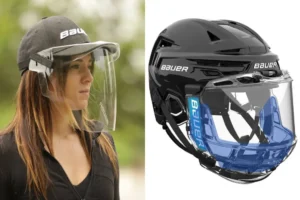
Visors and Cages: Half-visors became mandatory for new NHL players in 2013, while full-face cages/visors remain mandatory across youth, college, and international amateur hockey. Modern helmets utilize multi-density EPP liners and rotational impact technology designed specifically to reduce concussion risks.
D. Goaltending Gear: From Baseball Mitts to Full Armor
Early goalies wore virtually the same thin padding as outfielders, relying on cricket-style leg guards and baseball catcher’s mitts.
EARLY GOALIE (1920s):  Cricket Shin Pads + Baseball Mitt + No Mask + Heavy Leather
MODERN GOALIE (2020s): Lightweight Foam Leg Pads + Molded Kevlar Mask + Catching Glove / Blocker
The introduction of the fiberglass goalie mask by Jacques Plante in 1959 transformed goaltending from a dangerous survival test into a technical art form. Modern goalie pads use high-density, hydrophobic synthetic foams that slide effortlessly across the ice in the “butterfly” style while absorbing heavy slapshot impacts.
3. Impact on the Modern Game
The evolution of equipment has directly altered how ice hockey is played:
-
Increased Shot Velocity: The spring-like flex of composite sticks allows players to routinely pass the 100 mph mark on slapshots and release wrist shots faster than goalies can react visually.
-
Greater Player Speed: Carbon-fiber skates transfer almost 100% of leg power directly into forward propulsion, elevating the game’s overall pace.
-
Enhanced Safety & Longevity: Advanced cut-resistant kevlar socks, neck guards, and lightweight impact padding allow athletes to play longer, safer careers despite higher collision speeds.
Summary
The history of hockey equipment is a story of continuous innovation. From hand-carved wood and frozen leather to carbon fiber and impact-smart foams, technology has allowed athletes to push the physical limits of speed, precision, and performance on the ice.