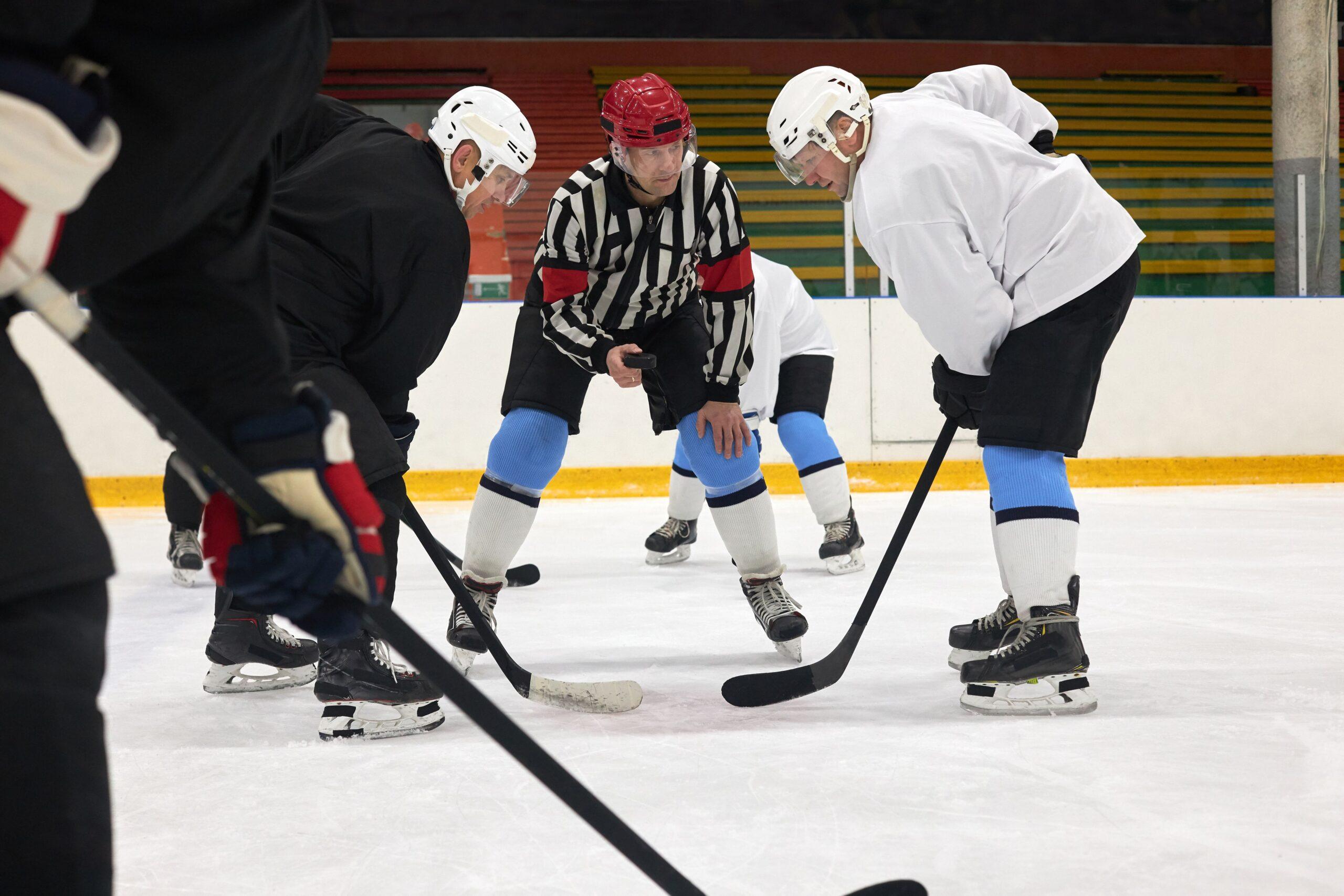
Of all the whistles blown during a hockey game, none is more common—or more frequently misunderstood by new fans—than the offside call.
Designed to prevent “cherry-picking” (players hovering near the opponent’s goal waiting for a long pass), the offside rule governs how attacking teams are allowed to cross into the offensive zone. While it may seem complicated at first glance, the concept is straightforward once you know what to watch for.
Here is a clear breakdown of the rule, how linesmen judge it, and the key exceptions every fan and player should know.
1. The Core Rule Explained
At its simplest level, the offside rule dictates that the puck must completely cross the attacking blue line before any attacking player’s skates enter the zone.
NEUTRAL ZONE (Middle Ice)  │  BLUE LINE  │  ATTACKING ZONE
                           │             │
Attacking Player  ───────> │  ──> PUCK   │  (Puck MUST cross first!)
-
Legal Entry: The puck carrier skates or passes the puck across the blue line before their teammates cross into the zone.
-
Offside Entry: An attacking player has both skates entirely inside the attacking zone before the puck crosses the blue line.
2. Skate Position: What Counts as “Onside”?
The linesman determines offside based on the position of the player’s skates, not their upper body or stick.
To be considered onside:
-
At least one skate must remain in physical contact with—or hovering directly over—the blue line (or neutral zone) until the puck has fully cleared the trailing edge of the line.
-
If a player’s back skate is lifted, modern rules in most major leagues (including the NHL) allow the skate to hover over the blue line planes as long as it hasn’t completely broken the vertical plane into the zone.
3. Delayed Offsides vs. Immediate Whistles
Not every offside entry results in an instant stoppage of play.
4. Key Exceptions to the Rule
There are two major scenarios where an attacking player can enter the zone ahead of the puck without being called offside:
A. Skated Backwards into the Zone (Puck Control)
If a player has complete control of the puck, they are permitted to skate backward across the blue line ahead of the puck. Because they have physical possession, they are driving the play, and no offside is called.
B. Defending Team Carries the Puck Back In
If a defending player receives or steals the puck in the neutral zone and accidentally passes or carries it back into their own defensive zone while attackers are still inside, play remains live. An attacking player cannot be called offside on a play created by the defense.
Summary
The offside rule keeps hockey fast-paced, structured, and fair. Just remember the main principle: the puck leads the charge into the offensive zone. As long as the puck crosses the blue line before the attacking skates do, the play is live!