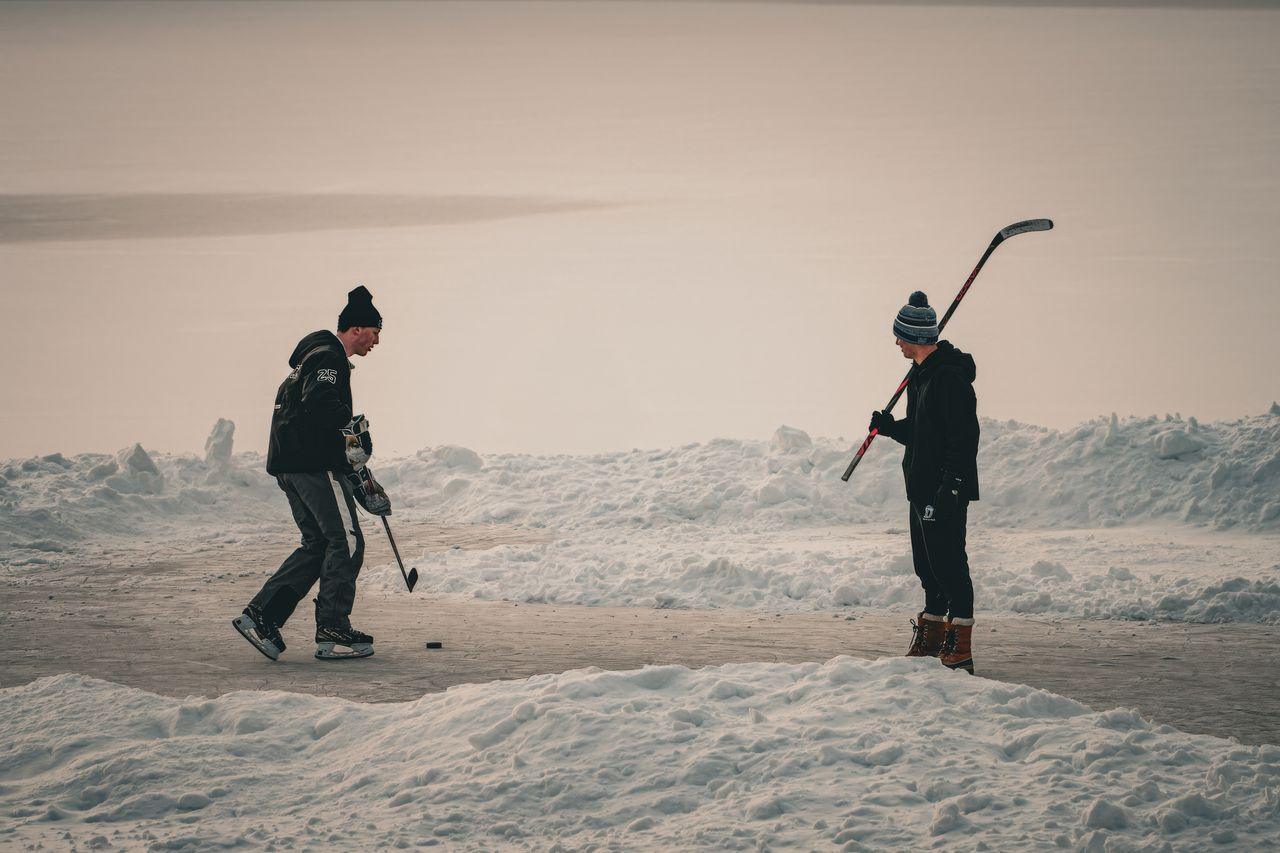
Before halogen lights, zambonis, and stadium echoes, hockey was defined by cold toes, shovels, and the natural scrape of steel on natural ice. Pond hockey is not merely an earlier version of the modern game—it is the foundational culture that shaped its spirit.
While organized indoor hockey has evolved into a high-speed, highly structured sport, pond hockey remains the game in its purest, most instinctive form.
The Elements: Nature as the Arena
The defining characteristic of outdoor hockey is its unpredictability. Unlike climate-controlled indoor rinks, pond hockey requires players to adapt to the environment.
-
The Surface: Black ice, frosted surfaces, bumps, cracks, and frozen twigs require constant focus and soft hands. You don’t just read the play; you read the ice.
-
The Ritual of Shoveling: Cleared ice is earned. Before a single puck is dropped, players spend an hour pushing snow to build natural boards, fostering immediate camaraderie.
-
Boot Nets & Shinny Rinks: Without formal nets, wooden pegs, boots, or stacked snowbanks serve as goalposts. High shots are discouraged by default—if you shoot too high, you spend twenty minutes searching through deep powder.
Game Rules & Unwritten Laws
Pond hockey relies on a distinct set of unwritten rules designed to keep the game continuous, fair, and fun.
| Traditional Pond Rule | Modern Indoor Equivalent | Cultural Purpose |
| Pond Boards (Boot Goal) | Regulation Net & Goalie | Keeps the game fast; encourages accurate, low saucer passes over heavy slapshots. |
| Self-Policing | Referees & Penalties | Fosters respect. Excessive body checking ruins the game for everyone on open ice. |
| Continuous Play | Whistles, Offsides, & Icing | Eliminates stoppages, keeping players warm and maximizing actual ice time. |
| “Sticks in the Middle” | Drafts & Rosters | Balances teams naturally by tossing all sticks into a pile and dividing them blindly. |
The Social Fabric: Thermoses, Firepits, and Dusk
Pond hockey is as much about what happens off the ice as on it. The sidelines are defined by wood fires, steaming thermoses of coffee or hot cocoa, and lace-tightening breaks on cold wooden benches.
Games run until the sunlight fades completely. As dusk settles, players play “next goal wins” until the puck can no longer be seen against the darkening ice. It connects players directly to the origins of the sport—a time when sport was governed strictly by daylight and winter weather.
Preserving the Tradition
In an era dominated by year-round indoor leagues and specialized youth training, pond hockey tournaments—such as the World Pond Hockey Championship in Plaster Rock, New Brunswick—have grown massively in popularity. They offer a deliberate reset, bringing players back to why they fell in love with the game in the first place: simple movement, outdoor winter air, and unscripted play.