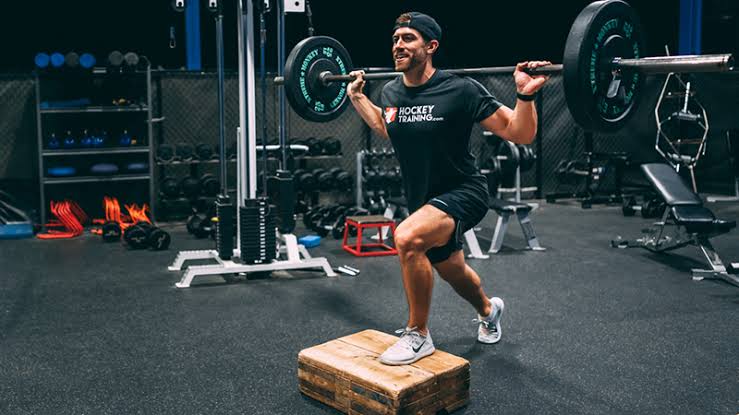
In ice hockey, core strength is not about having a visible six-pack; it is about force transfer and postural stability. Every stride push, physical check along the boards, and rapid rotational shot depends on a stable midsection acting as a bridge between your lower and upper body.
Because skating takes place on a unstable surface (a 3-millimeter steel blade on slick ice), a weak core causes energy leakage. If your torso collapses under pressure, you lose skating speed, struggle to stay balanced during physical contact, and dissipate shot power.
Here is how the core functions in hockey and the best functional exercises to build an unbreakable trunk.
The Three Pillar Functions of the Hockey Core
Traditional sit-ups and crunches train trunk flexion—a motion rarely used in hockey. Instead, an elite hockey core training program focuses on three distinct functional demands:
-
Anti-Extension: Preventing the lower back from excessively arching (hyperextending) during stride recovery or heavy shooting.
-
Anti-Rotation: Resisting unwanted twisting forced by an opponent during body checking or board battles.
-
Rotational Power: Actively loading and releasing torsional force through the obliques and hips during snap shots, slap shots, and pass receptions.
5 Essential Core Exercises for Hockey Players
1. The Pallof Press (Anti-Rotation)
The Pallof press teaches the deep abdominal wall (transverse abdominis and obliques) to lock down the spine against lateral pulling forces, making you nearly impossible to knock off the puck.
-
How to Do It: Anchor a resistance band or cable machine at chest height. Stand perpendicular to the anchor point, holding the handle with both hands at your chest. Step away to create tension. Brace your core and press the cable straight out in front of you without letting your torso twist. Hold for 2 seconds, then return to your chest.
-
Sets & Reps: 3 sets × 10–12 reps per side.
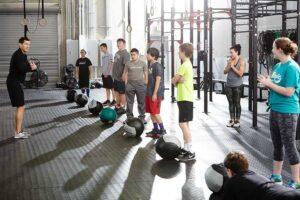
2. Stir-the-Pot on a Swiss Ball (Anti-Extension & Dynamic Stability)
This advanced movement forces the core to maintain a neutral spine while the shoulders and arms move dynamically—mimicking the upper-body motion of stickhandling while keeping a lower-body glide stance.
-
How to Do It: Place your forearms on a stability ball and extend your legs behind you into a plank position. Keep your body in a straight line from head to heels. Without letting your hips sag or rotate, move your elbows in small, controlled circles to “stir the pot.”
-
Sets & Reps: 3 sets × 8 circles clockwise / 8 circles counter-clockwise.
3. Suitcase Carries (Unilateral Anti-Lateral Flexion)
Hockey strides happen one leg at a time. Single-arm farmer’s carries (suitcase carries) build lateral hip and core stability, preventing your trunk from leaning or swaying during high-speed gliding.
-
How to Do It: Pick up a heavy kettlebell or dumbbell in one hand like a piece of luggage. Stand tall with your shoulders level and eyes forward. Walk 30–40 yards in a straight line without letting the weight pull your torso to one side.
-
Sets & Reps: 3–4 sets × 30–40 yards per arm.
4. Half-Kneeling Half-Moon / Cable Chops (Rotational Force)
This exercise trains the diagonal kinetic chain—connecting the opposite hip to the opposite shoulder for max shot velocity and quick passing power.
-
How to Do It: Assume a half-kneeling position (one knee on the ground, one foot flat in front at 90 degrees). Attach a rope or handle to a high cable pulley. Grasp the handle with both hands, pull it diagonally across your chest, and push it down toward your outside hip while keeping your hips stable.
-
Sets & Reps: 3 sets × 8–10 reps per side.
5. Deadbugs with Band Resistance (Integrated Stabilization)
Deadbugs build cross-body coordination between the shoulders and hips while keeping the lower back flat against the floor.
-
How to Do It: Lie flat on your back with arms reaching toward the ceiling and knees bent at 90 degrees. Press your lower back flat into the floor (no space under your lower back). Slowly extend your right arm back and left leg forward until they are just above the ground. Return to the starting position and switch to the opposite arm and leg.
-
Sets & Reps: 3 sets × 10 reps per side.
Core Training Rules for Hockey Players
| Do This | Avoid That |
| Train for stability first, rotation second. Build a rock-solid plank foundation before adding violent twisting drills. | Avoid high-volume spinal flexion. Excessive sit-ups strain the hip flexors and lower back, aggravating posture issues from skating. |
| Quality over quantity. Focus on maximum tension, controlled breathing, and perfect form. | Don’t hold your breath. Learn to brace your core while maintaining steady diaphragm breathing. |
| Incorporate unilateral loading. Single-arm and single-leg stability directly translates to single-blade skating mechanics. | Don’t ignore the glutes. The core works in tandem with the glutes to stabilize the pelvis—train them together. |