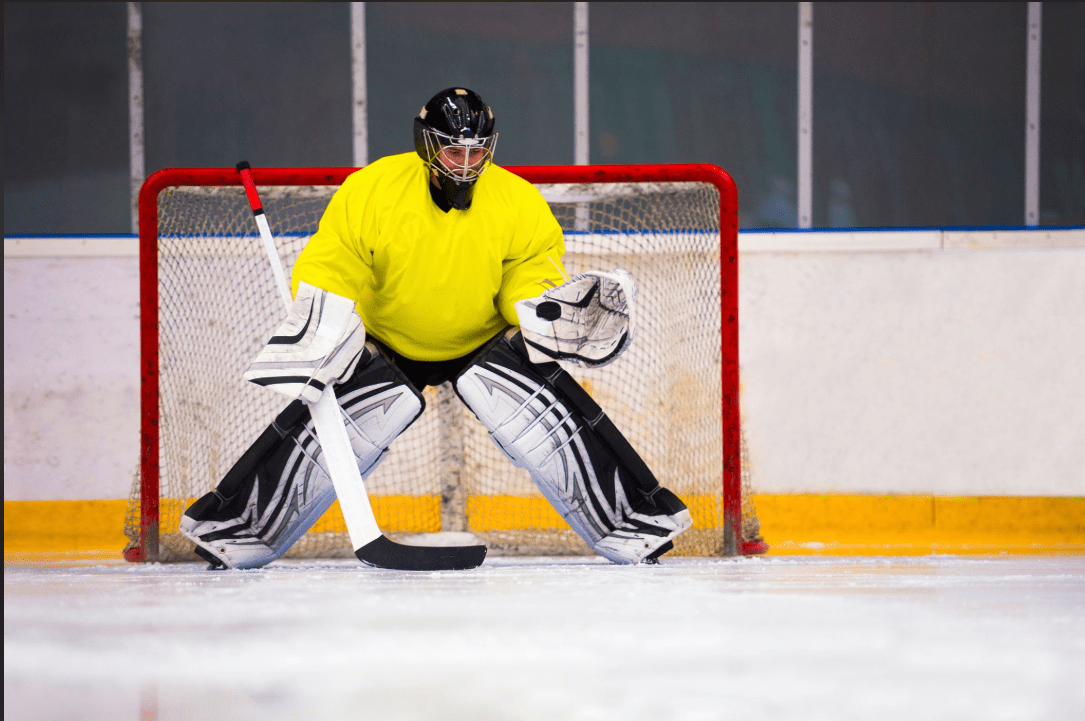
In ice hockey, goaltending is arguably the most physically and mentally demanding position on the ice. Goalies have less than a fraction of a second to react to slaptots exceeding 90 mph, deflected pucks, and rapid cross-crease passes.
While raw instinct plays a role, top-tier goaltending relies on trainable physical skills: explosive footwork, sharp hand-eye coordination, and visual tracking. Whether you are an amateur goalie looking to advance your game or a coach building a off-ice program, here is how to systematically build elite agility and reaction speed.
1. Master On-Ice Crease Movement
Agility in the crease isn’t just about moving fast—it’s about moving efficiently with absolute control. If your footwork is sloppy, your body won’t be in a balanced position to react to a shot.
Key Movement Mechanics to Drill:
-
C-Cuts: Used for short precise adjustments forward and backward. Keep your weight centered on your inside edges so you remain balanced.
-
T-Glides (T-Pushes): Used for long-distance lateral movements across the crease. Turn your head, rotate your shoulders, load your push leg, and drive smoothly to the post.
-
Shuffles: Essential for short lateral adjustments while maintaining a square stance to the puck.
-
Butterfly Pushes (Slide Recovery): Practice pushing off your inside skate edge while down in the butterfly position to slide across the goal line for backdoor saves.
Crease Agility Drill: Set up a 5-point star pattern using cones or pucks around the crease. Practice rotating, T-pushing, stopping instantly, and dropping into a butterfly before recovering back to your feet.
2. Train Vision and Eye-Tracking Dynamics
Reaction time isn’t just about how fast your muscles move—it’s about how fast your brain processes visual information. The faster your eyes locate and lock onto the puck, the more time your body has to react.
-
Practice “Quiet Eye” Technique: Focus your vision sharply on the puck before it is shot. Keep your head completely still as the shooter loads up.
-
Track the Puck into the Glove: Never stop looking at the puck once it leaves the stick. Watch it all the way until it contacts your glove, blocker, or pads.
-
Eye-Tracking Apps & Strobe Glasses: Many professional goalies use vision-training tools like light-board reaction trainers or strobe goggles during dryland training to force the brain to process visual cues faster under restriction.
3. Off-Ice Reaction and Hand-Eye Drills
Dryland training is where goalies build the neural pathways required for fast reflexes. You don’t need expensive equipment to sharpen your hand-eye coordination at home.
High-Impact Off-Ice Exercises:
-
Two-Tennis-Ball Wall Toss: Stand facing a smooth wall in a goal stance. Alternate throwing two tennis balls off the wall with one hand and catching with the other. To increase difficulty, throw overhand or stand closer to the wall.
-
Reaction Ball Drops: Use a six-sided rubber reaction ball that bounces unpredictably off flat surfaces. Drop it from chest height and react immediately to catch it on the first bounce.
-
Juggling Variations: Juggling three balls improves hand-eye coordination, spatial awareness, and peripheral vision. Progress to juggling against a wall or while standing on an unstable surface like a Bosu ball.
4. Build Explosive Lower-Body Power and Core Stability
To move quickly in gear weighing 25+ pounds, goalies require massive lower-body power and core strength. Agility relies on the ability to decelerate, change direction, and explode back out in a millisecond.
-
Plyometric Box Jumps & Lateral Bound: Build explosive leg strength by performing single-leg lateral jumps (skater hops), landing softly, and pushing back immediately.
-
Hip Mobility Work: Open hips allow for wider butterfly spreads and smoother recoveries. Dedicate 10–15 minutes daily to dynamic hip stretches (like 90/90 stretches and frog stretches).
-
Core Anti-Rotation: A strong core keeps your chest upright when sliding or making low saves. Incorporate Cable Pallof presses, plank variations, and medicine ball side tosses into your routine.
5. Structured Pre-Game Reaction Warmup
Never enter the ice cold. A 10-to-15-minute off-ice warmup readies your nervous system before your skates touch the ice.
-
Dynamic Stretches (5 mins): Leg swings, arm circles, torso twists, and deep squat pulses.
-
Neuromuscular Activation (5 mins): Fast-feet ladder drills, quick-reaction ball catches, and short lateral shuffles.
-
Visual Focus (3 mins): 1-on-1 tennis ball tossing with a teammate to dial in eye tracking before putting on your helmet and pads.
Summary
Consistent daily practice—even 15 minutes of off-ice ball drills—compounds into noticeable speed gains over a season. Combine crisp footwork mechanics with visual tracking and explosive conditioning, and you’ll consistently stay one step ahead of shooters.