At any given time during standard play, each ice hockey team has six players on the ice: three forwards (Offense), two defensemen (Defense), and one goaltender (Goalie). While their roles shift dynamically based on where the puck is, each position comes with distinct responsibilities and zone coverage.
1. The Offense (Forwards)
The offensive unit consists of three players tasked with driving the rush, creating scoring chances, and forechecking to pressure defenders into turning over the puck.
Center (C)
-
Primary Role: The engine of the line and the ultimate “200-foot player” (active from end to end).
-
Key Responsibilities:
-
Faceoffs: Responsible for taking faceoffs at center ice and in both end zones to gain immediate possession.
-
Playmaking: Directs offensive zone entries, distributing the puck to the wings or driving to the high-danger slot area.
-
Low Defensive Support: Deep in the defensive zone, the center acts as a third defenseman, helping dig pucks out of corners and supporting behind the net.
-
Left Wing (LW) & Right Wing (RW)
-
Primary Role: Flank attack, board battles, and goal-scoring.
-
Key Responsibilities:
-
Forechecking & Wall Play: Pressure opposing defensemen along the side boards to force turnovers.
-
Net-Front Presence: Screening the opposing goalie and hunting for rebounds or tip-ins in front of the crease.
-
Defensive Zone Coverage: Cover the opposing defensemen at the points (near the blue line) to block slap shots and intercept long passes.
-
2. The Defense (Defensemen)
The defense pair operates as the last line of skaters protecting the goaltender, while also playing an essential role in transitioning the puck up ice.
Left Defense (LD) & Right Defense (RD)
-
Primary Role: Protecting the defensive zone, suppressing high-danger shots, and orchestrating breakouts.
-
Key Responsibilities:
-
Gap Control: Maintaining optimal distance from attacking forwards entering the zone to force offside or push them to the outside boards.
-
Puck Retrieval & Breakouts: Retrieving dumped pucks behind their own net and making quick, accurate outlet passes to forwards.
-
Point Play (Offensive Zone): Holding the blue line to keep the puck inside the offensive zone, distributing across the line, or taking long wrist/slap shots toward the net.
-
3. Goaltending
Goaltender / Goalie (G)
-
Primary Role: Stopping the puck from entering the net — simple to state, incredibly complex to execute.
-
Key Responsibilities:
-
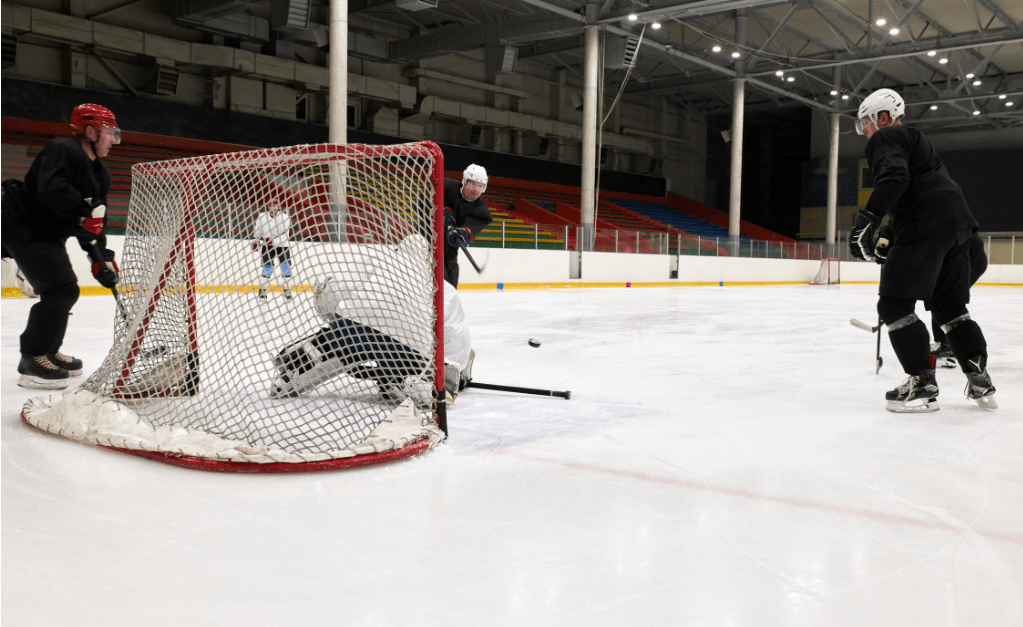
Angle Management & Depth: Cutting down shooting angles by positioning out toward the edge of the crease (“butterfly” or standing stance).
-
Rebound Control: Using leg pads, blocker, and stick to direct saved shots toward the corners away from second-chance shooters.
-
Puck Handling: Playing dumped pucks behind the net to assist defensemen under heavy forechecking pressure.
-
Communication: Acting as the team’s eyes, calling out open opponents or incoming pressure to defensemen.
-
Quick Positional Breakdown
| Position | Primary Zone Focus | Crucial Skillset |
| Center | Entire Rink (200 ft) | High hockey IQ, faceoff timing, cardiovascular endurance |
| Wings | Boards & Offensive Slot | Speed, physical board play, shot accuracy |
| Defensemen | Defensive Zone & Blue Line | Backward skating, physical gap control, passing vision |
| Goaltender | Goal Crease | Lateral agility, fast reflexes, mental composure |