If skating is the engine of a hockey player, stickhandling is the steering wheel. Soft hands, quick wrists, and complete confidence with the puck allow players to navigate tight pressure, weave through defenders, and set up scoring chances.
Many beginners assume great stickhandlers are born with magical coordination, but puck control is purely a trained mechanical skill. By understanding hand roles, maintaining proper stance, and executing daily drills, you can rapidly build elite puck-handling habits.
1. Mechanics 101: The Roles of Each Hand
The single biggest mistake beginner hockey players make is treating both hands equally. To control the puck smoothly, your top and bottom hands must perform completely different jobs:
-
The Top Hand (Control & Rotation): Positioned at the very top of the shaft (butt-end resting in your palm). Your top hand acts as the anchor—it controls stick rotation, rolls your wrist to “cup” the blade over the puck, and bears most of the stick’s weight.
-
The Bottom Hand (Guide & Support): Placed roughly forearm-length down the shaft. Your bottom hand should grip loose and relaxed—acting as a guide tube that slides up and down the stick as you extend your reach.
Key Rule: Never grip the stick tightly with your bottom hand. A rigid bottom grip freezes your wrists, causing the puck to bounce off your blade instead of sticking to it.
2. Proper Athletic Position for Stickhandling
You cannot control the puck if your body is stiff. Set up in a strong, flexible posture:
-
Feet Shoulder-Width Apart: Knees deep, chest up, and head elevated.
-
Top Hand Away From the Body: Keep your top elbow bent and slightly pushed out from your torso (about a fist’s distance). Tucking your top arm against your side restricts your range of motion.
-
Soft Blade Contact: Catch the puck with the middle of the blade rather than slapping at it. Cupping the blade—rolling the top wrist forward so the blade covers the top of the puck—keeps it glued to the ice.
3. Essential Drills for Better Puck Control
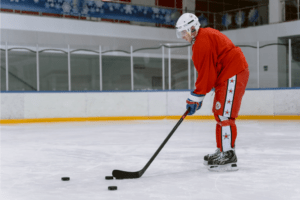
These foundational drills can be practiced on the ice or at home using a shooting pad, synthetic ice, or garage floor with a wooden stickhandling ball or Green Biscuit.
Common Stickhandling Pitfalls to Avoid
Daily Practice Plan
Dedicate 10 to 15 minutes a day to off-ice dryland stickhandling. Rapid repetition off the ice translates directly to soft hands and effortless puck control the next time you step onto the rink.