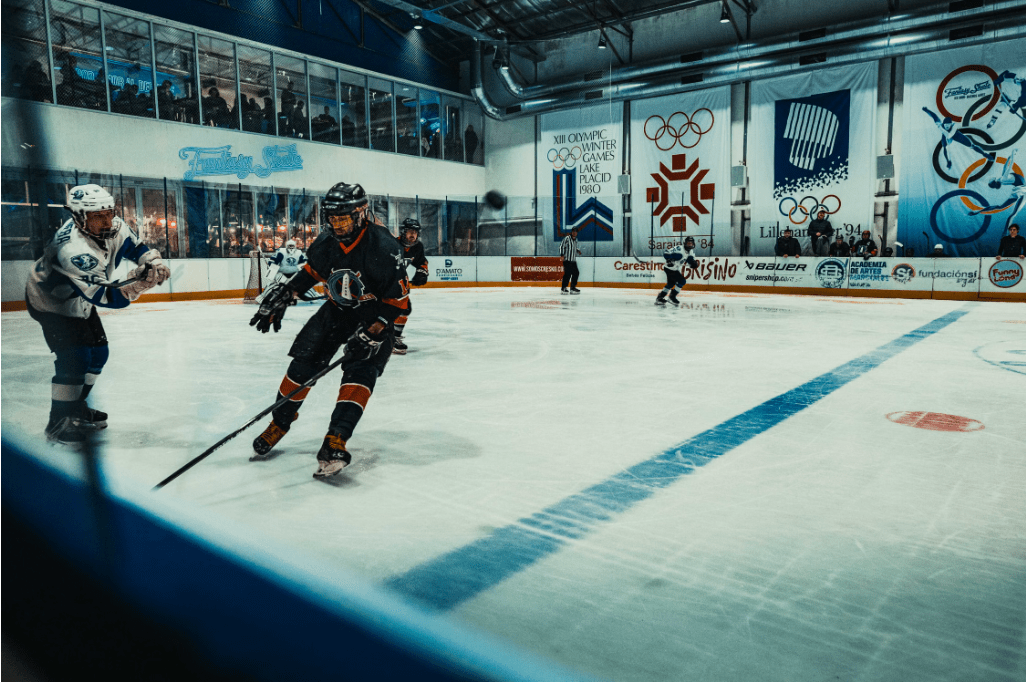
Defensive Zone Coverage (DZC) determines how a team protects the high-danger scoring area directly in front of the goal—often referred to as “the house.” When an opponent controls the puck inside your blue line, having a disciplined defensive framework prevents open passing lanes, screens, and second-chance rebounds.
Coaches generally structure their defensive zone coverage using one of two philosophy styles: Man-to-Man or Zone Coverage (or a hybrid mix of both).
1. Man-to-Man Defensive Coverage
In a strict Man-to-Man system, each defensive player is assigned a specific opposing player to stick with, regardless of where that opponent moves within the defensive zone.
How It Works
-
Assignments: Typically, defensemen cover opposing forwards down low along the boards and behind the net. The center takes the opposing center, while wingers track the opposing point defensemen near the blue line.
-
Execution: Defending players stick close to their designated check (“hip-to-hip”), using body positioning and stick checks to deny them space to receive passes.
Pros & Cons
-
Pros: Clear accountability—every player knows exactly who they are responsible for. Highly effective against predictable, static offensive plays.
-
Cons: Exhausting to execute. If an attacking player wins an individual footrace or uses cross-ice cycling to swap positions, it leaves a defender trailing, creating instant defensive breakdowns.
2. Zone Defensive Coverage (Low Zone / Box-and-One)
In a Zone System, players guard designated geographical areas of the ice rather than chasing specific opponents.
How It Works
-
Assignments: The net-front area and low corners are covered by the defensemen and center, forming a compact defensive triangle below the faceoff dots. Wingers protect the high slot and point lanes.
-
Execution: Players shift and rotate as a unit based on the location of the puck. Whichever defender is closest to the puck pressures the puck carrier, while the remaining four collapse inward to protect the slot.
Pros & Cons
-
Pros: Conserves energy, keeps defenders between the puck and the net, and practically eliminates high-danger slot passes.
-
Cons: Gives opponents more time along the perimeter/blue line to take point shots or set up plays.
3. The Modern Solution: Hybrid Defensive Zone Coverage
Most modern NHL and high-level amateur teams utilize a Hybrid System that combines elements of both:
-
Down Low (Man-to-Man): The two defensemen and center play man-to-man below the faceoff dots to prevent cycling and net-front screens.
-
Up High (Zone): The wingers play a zone scheme near the blue line, blocking point shots and clogging lane transitions without getting pulled too deep into the corners.
Direct System Comparison
| Feature | Man-to-Man Coverage | Zone Coverage |
| Primary Focus | Tracking specific opposing players | Protecting high-danger areas (“the house”) |
| Physical Demand | High (constant skating & battles) | Moderate (positional positioning & collapse) |
| Puck Pressure | Immediate & intense everywhere | High in corners/slot, low on perimeter |
| Risk Factor | High if a defender loses a 1-on-1 | Moderate (allows perimeter point shots) |