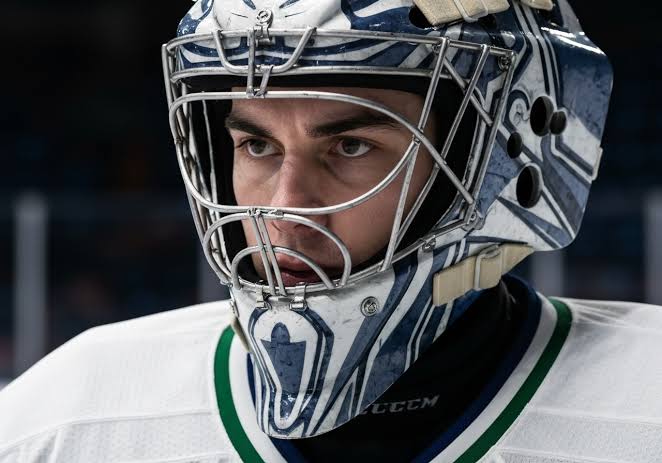
Hockey is often described as a game of mistakes. At 20 to 30 miles per hour on a slippery sheet of ice, pucks bounce, passes get intercepted, and turnovers happen to everyone from beginner rec-leaguers to NHL superstars.
The factor that separates good players from great ones often isn’t raw physical talent or speed—it’s mental resilience.
Developing bulletproof on-ice confidence and laser focus allows you to play reactively, trust your skill set, and perform under pressure without letting fear or frustration drag down your game. Here is a practical framework for building an elite hockey mindset.
1. Shift from Outcome Goals to Process Goals
Confidence falters when your self-worth as a player depends entirely on outcomes you cannot completely control—like scoring goals, getting assists, or winning every game.
Instead, shift your focus toward process goals: small, controllable actions you can execute on every single shift.
-
Outcome Focus (Uncontrollable): “I need to score two goals tonight.”
-
Process Focus (Controllable): “I will backcheck hard every shift, move my feet in the corners, and keep my stick on the ice.”
When you focus on executing process goals, confidence follows naturally because you are consistently achieving what you set out to do, regardless of how lucky or unlucky the bounces are.
2. Develop a “Short-Term Memory” for Mistakes
The fastest way to lose confidence is to replay a bad play over and over in your head while sitting on the bench. In hockey, sitting on a mistake guarantees you’ll play hesitantly on your next shift.
The 5-Second Flush Method
Adopt a physical trigger to leave mistakes behind before your next shift:
-
Acknowledge it briefly: Identify what went wrong (e.g., “I held the puck too long at the blue line”).
-
Use a physical reset trigger: Unclasp and re-clasp your chin strap, squirt water from your bottle, or tap your stick against the boards.
-
Flush it: Tell yourself, “Next shift.” Once your feet hit the bench, the previous shift no longer exists.
3. Practice Visualization (Mental Repetitions)
Your brain cannot easily distinguish between a vividly imagined event and a real physical experience. Visualization builds neural pathways that make actions feel familiar and natural during high-pressure game situations.
-
Before the Game: Spend 5 to 10 minutes in a quiet space before getting dressed. Close your eyes and visualize yourself executing clean plays—winning a wall battle, making a crisp breakout pass, or cleanly stopping a breakaway.
-
Engage All Senses: Feel the vibration of the stick in your hands, hear the sound of the skates cutting into the ice, and see the puck hitting the back of the net.
4. Master On-Ice Focus: Controlling the “Controllables”
Focus in hockey means directing your mental energy toward what helps you win the shift, rather than wasting energy on distractions.
WHAT YOU CAN CONTROL                WHAT YOU CANNOT CONTROL
--------------------                -----------------------
• Your work ethic & hustle          • Bad referee calls
• Your reaction to bad bounces      • Puck bounces / ice quality
• Communication with teammates     • Opponents' chirping or dirtiness
• Bench energy & positivity         • Ice time decisions by coaches
When you catch yourself getting angry at an official or frustrated by an opponent chirping, take a deep breath and redirect 100% of your energy back to your own play and work ethic.
5. Use Positive and Instructive Self-Talk
The internal dialogue running through your mind directly affects your body language and reaction time. Hesitation usually stems from negative self-talk like “Don’t mess this up” or “Don’t turn it over.”
The brain struggles to process negatives in high-speed situations—focusing on “Don’t turn it over” highlights the turnover in your mind.
-
Instead of negative commands: “Don’t miss the net.”
-
Use positive/action commands: “Puck on target.” or “Move your feet!”
Keep your internal cues short, rhythmic, and action-oriented: “Head up,” “Drive the seam,” “Quick feet.”
Summary: The Mindset Checklist

Developing confidence is a muscle that requires daily repetition, just like your wrist shot or crossover edge.
-
Set 2–3 process goals before stepping onto the ice.
-
Use a physical reset trigger to flush mistakes on the bench.
-
Spend 5 minutes visualizing success during pre-game preparation.
-
Keep your self-talk actionable, short, and focused on what you should do.