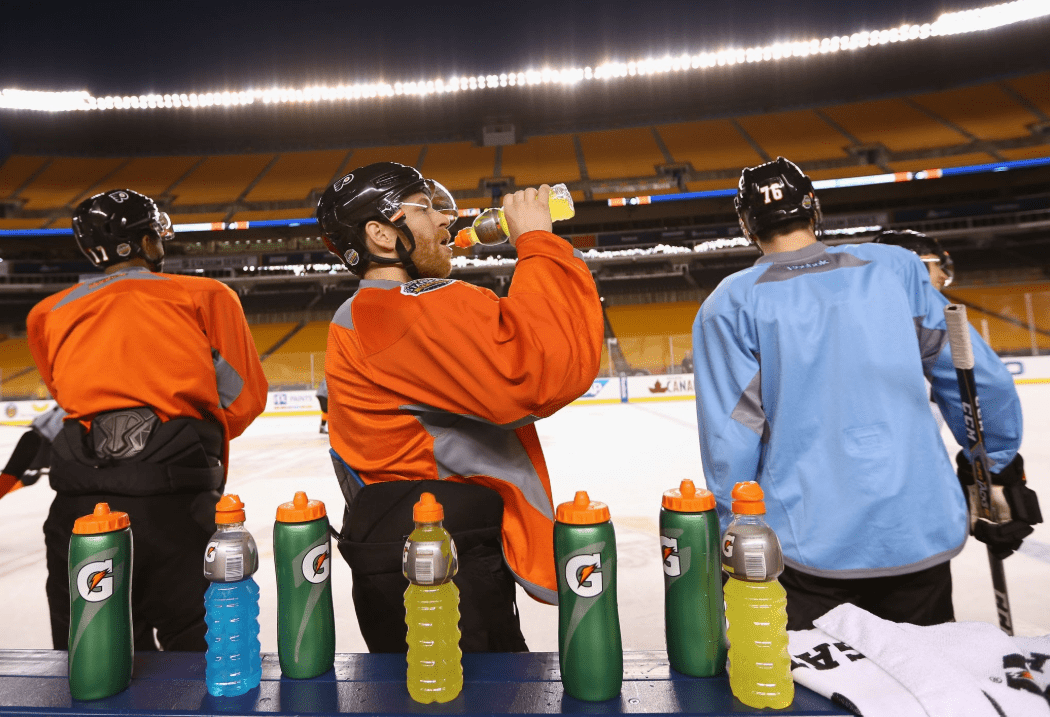
Ice hockey presents a unique environmental paradox: players exert max-effort anaerobic bursts in a cold arena while wearing 20 to 25 pounds of heavy, non-breathable protective gear. Because the microclimate under a hockey player’s pads heats up rapidly, athletes sweat heavily—often without realizing the true extent of their fluid loss due to the cool surrounding air.
A fluid loss of just 2% of total body weight leads to a measurable decline in skating speed, reaction time, shot power, and decision-making on the ice.
Developing a structured, multi-phase hydration strategy is essential for optimizing performance, avoiding late-game muscle cramps, and accelerating post-game recovery.
The Hidden Cost of Dehydration in Hockey
When you become dehydrated on the ice, your blood volume drops, forcing your heart to beat faster to pump oxygen to your working muscles.
How Dehydration Affects On-Ice Performance:
-
Slower Reaction Time: Decreased cognitive processing makes reading plays and anticipating passes harder.
-
Early Anaerobic Fatigue: Lactic acid builds up faster, leading to heavy legs in the 3rd period.
-
Loss of Explosive Power: Reduced muscle contraction efficiency directly hurts crossover acceleration and shot velocity.
-
Increased Risk of Cramping: Loss of critical electrolytes (sodium, potassium, magnesium) causes involuntary muscle spasms.
1. Pre-Game Hydration (24 to 2 Hours Before Puck Drop)
Hydration cannot be fixed 10 minutes before stepping onto the ice; it begins the day before a game or practice.
-
24 Hours Out: Sip water consistently throughout the day. Your urine should be a pale lemon color—dark yellow indicates a pre-existing fluid deficit.
-
3 to 4 Hours Before Game Time: Drink 16 to 20 ounces (500–600 ml) of water alongside your pre-game meal.
-
2 Hours Before Puck Drop: Drink an additional 8 to 12 ounces (250–350 ml) of water or an electrolyte solution.
Pro Tip: Avoid reliance on energy drinks or high-caffeine supplements right before a game. High doses of caffeine act as a mild diuretic and can spike your heart rate prematurely before high-intensity shifts.
2. In-Game Hydration (On the Bench & Intermissions)
During a 60-minute game, players lose between 1.5 to 3.5 liters of sweat, depending on body mass, shift length, and arena temperature.
Bench Hydration Rules:
-
Sip, Don’t Gulp: Drink 3 to 6 ounces (a few solid gulps) of fluid every 15 to 20 minutes (roughly after every 2–3 shifts). Gulping large volumes creates a heavy, sloshing stomach during fast-paced play.
-
Combine Water and Electrolytes: Plain water is sufficient for light practices, but intense games require electrolytes (specifically sodium) to retain fluid and maintain nerve signaling.
-
Intermission Protocol: Use the two 17-minute intermissions to consume 12 to 16 ounces of an electrolyte-carbohydrate solution. The fast-acting carbohydrates replenish depleted muscle glycogen for the upcoming period.
3. Post-Game Recovery Hydration (The 150% Rule)
Rehydrating after a tough game is vital, especially during tournament weekends or back-to-back game schedules.
How to Calculate Post-Game Fluid Needs:
-
Weigh Yourself Before and After: Weigh yourself in light clothing before warmups and immediately after taking off your gear post-game.
-
Apply the 150% Rule: For every 1 pound (0.45 kg) of body weight lost during the game, consume 24 ounces (700 ml) of fluid over the next 2–4 hours.
Weight Lost During Game    -->    Required Post-Game Fluid Intake
-----------------------           --------------------------------
1.0 lbs (0.45 kg)         -->    24 oz (700 ml)
2.0 lbs (0.90 kg)         -->    48 oz (1.4 Liters)
3.0 lbs (1.35 kg)         -->    72 oz (2.1 Liters)
What to Drink Post-Game:
-
Electrolyte + Protein/Carb Drinks: Chocolate milk, specialized recovery shakes, or electrolyte solutions paired with a balanced post-game meal help restore glycogen and repair muscle tissue faster than water alone.
Summary Hydration Checklist

| Timeframe | Action Step | Fluid Type |
| Day Before Game | Continuous sipping; check urine color | Water |
| 2–4 Hours Before | 16–20 oz with pre-game meal | Water / Low-sugar electrolytes |
| During Game | 3–6 oz every 15 mins on bench | Water + Electrolyte/Carb mix |
| Post-Game | 24 oz per 1 lb of weight lost | Recovery shake / Water + Sodium-rich meal |
Final Thoughts
Treat hydration as a performance-enhancing tool rather than an afterthought. By maintaining proper fluid and electrolyte balance before, during, and after games, you protect your body from premature fatigue and ensure you have the energy needed to win puck battles late in the 3rd period.