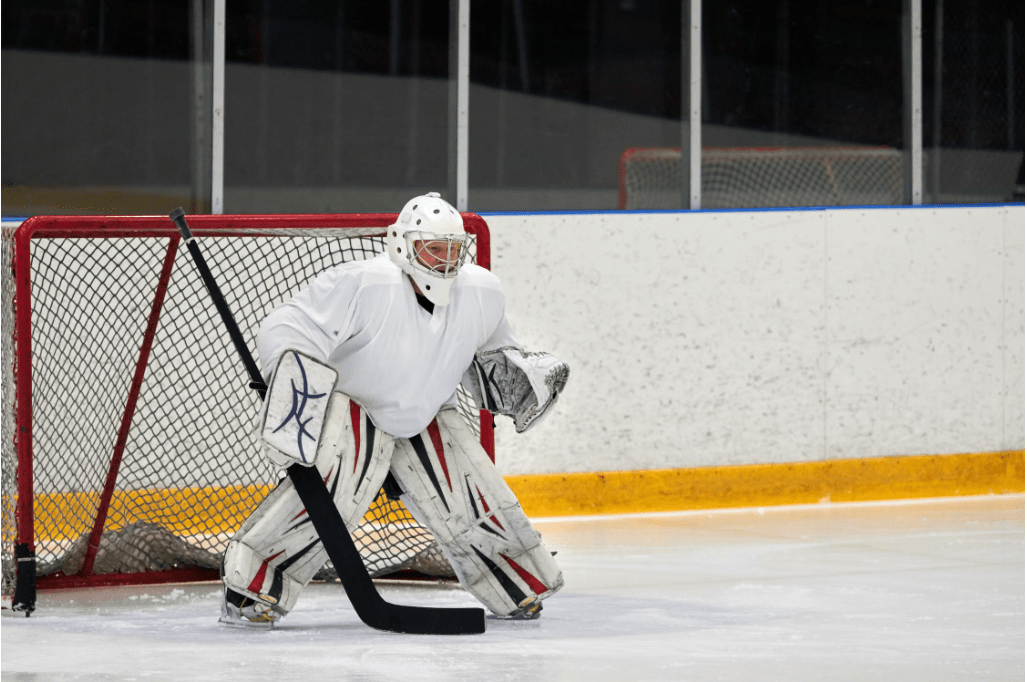
Screening the goaltender and tipping pucks in front of the net is one of the most effective ways to score in modern hockey. Goaltenders save over 90% of unscreened shots from the point, but that number drops drastically when sightlines are blocked or when a shot changes direction mid-flight.
1. How to Screen the Goalie Effectively
Screening isn’t just standing in front of the crease—it requires dynamic positioning to continuously block the goalie’s sightline while avoiding interference calls or getting pinned by opposing defensemen.
-
Find the Sightline (The “T-Line”): Position yourself directly between the puck-carrier at the point and the goalie’s eyes. If the shooter shifts left or right along the blue line, adjust your position laterally to maintain the obstruction.
-
Master the “Flash” Screen: Instead of staying continuously parked in front of the crease—where a defenseman can easily push you out of the lane—stand just outside the lane and step directly into the goalie’s vision right as the shooter releases the puck.
-
Keep Your Feet Outside the Crease: Ensure both skates remain strictly outside the blue paint to avoid nullifying goals due to goaltender interference.
-
Establish a Strong Base: Bend your knees deep, widen your stance, and drop your center of gravity. When a defenseman cross-checks or leans into you, absorb the contact through your legs and hips rather than leaning backward into the goaltender.
2. Deflection & Tip-In Mechanics
Redirecting a puck moving 70–90 mph requires precise stick control, soft hands, and constant eye tracking.
3. Battles with Defensemen
-
Blade-on-Blade Protection: Defensemen will constantly try to lift or pin your stick. Keep your stick blade pressed firmly against the ice or keep it high until the exact moment the shot is released, then snap it down to meet the puck.
-
Use Back-Seating (Boxing Out): Use your backside and hips to establish leverage against the defenseman’s thighs, holding your ground without getting pushed into the goalie.
-
Stay Mobile: If the defenseman is overly aggressive, use short pop-out moves—step toward the back post or slot for a quick deflection or pass.