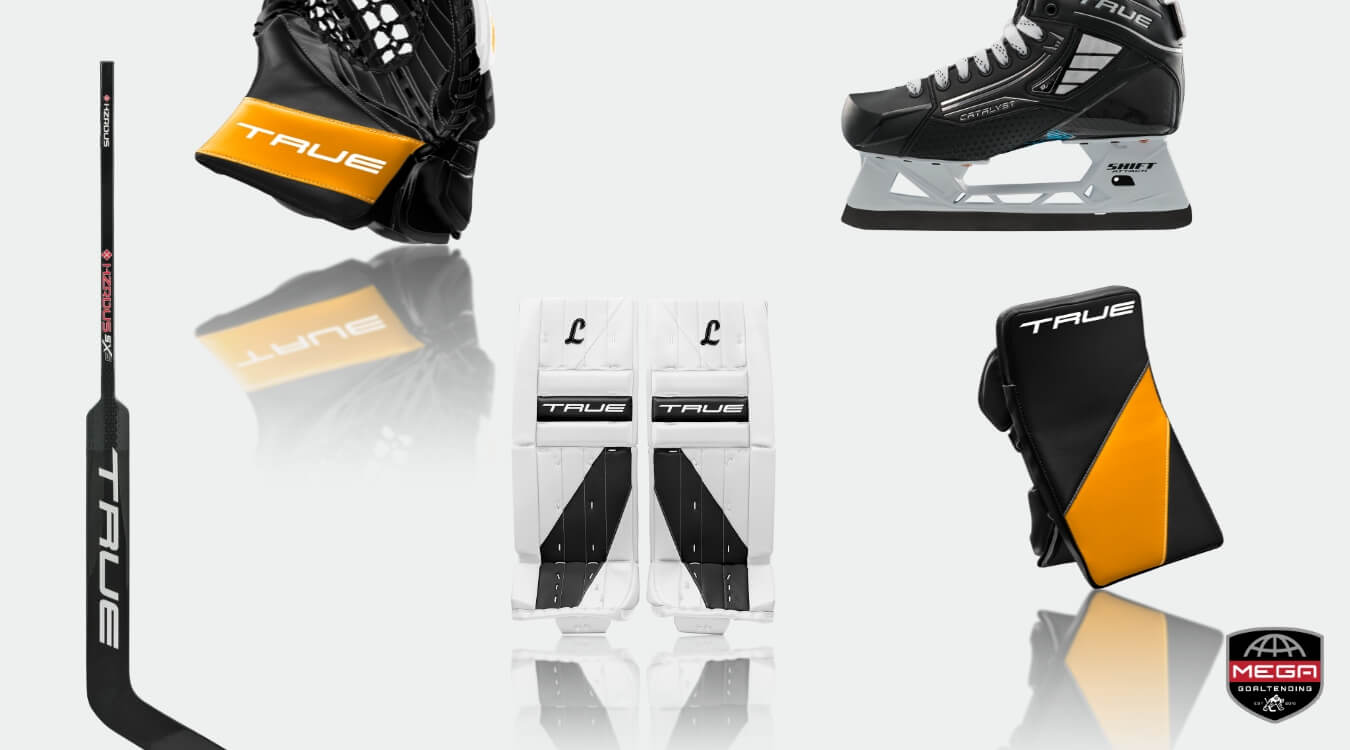
In ice hockey, the goaltender stands as the last line of defense. Because goalies step directly into the line of fire—facing heavy vulcanized rubber pucks traveling up to 100 mph—their gear is engineered completely differently from a skater’s equipment. Goalie pads are reinforced for maximum coverage, impact dispersion, and flexibility during rapid butterfly drops and slides.
Whether you are stepping into the crease for the first time or helping a young player build their goalie kit, this breakdown covers every essential piece of goaltending protection from head to toe.
1. Head & Neck Protection
Goalies absorb frequent direct impacts to the head from slaphots, high deflections, and stray sticks in the crease. Regular skater helmets are never sufficient.
Goalie Mask
Goalie masks feature a distinctive fiberglass or carbon fiber shell with a cat-eye or straight-grid steel cage. They are designed with a sloping forehead profile to deflect shots upward and away from the face while absorbing impact shock through thick internal foam.
Neck Guard & Dangler
-
Lexan Dangling Shield: A clear, thick polycarbonate plastic shield hung from the chin of the mask to protect the throat and collarbone from direct puck strikes.
-
Cut-Resistant Goalie Neck Guard: A soft, high-density foam collar worn around the neck to protect against skate blades and impacts along the collarbone.
2. Core Body & Upper Armor
Goalie Chest and Arm Protector
Unlike skater shoulder pads, a goalie chest unit covers the upper body as a single, fully integrated piece. It features thick, overlapping foam plates across the sternum, ribs, shoulders, and arms to shield against high-velocity shots.
-
Fit Check: The wrist cuffs should align with your glove openings without pushing them off, while the bottom belly pad covers your waist line when dropped in a butterfly stance.
Goalie Jock or Jill
Goalie-specific pelvic protection features double-layered protective cups and extra dense foam around the groin and inner thighs to absorb heavy impacts in low butterfly slides.
Goalie Pants
Goalie pants feature high-density molded plastic hips, inner thigh guards, and extended tailbone coverage. They are wider than player pants, allowing goalies to drop into deep knee bends and butterfly stances without restricting leg mobility.
3. Gloves: Catch Glove & Blocker
Goalies wear two entirely distinct gloves tailored to each hand:
| Feature | Catch Glove (Trapper) | Blocker |
| Primary Function | Snagging shots out of the air & freezing pucks | Deflecting shots into corners with high velocity |
| Key Components | Deep webbing pocket, thumb guard, wrist strap | Curved rectangular block board, palm shield |
| Hand Placement | Non-dominant hand (for standard right-handed catch) | Dominant stick hand |
4. Leg Protection & Footwear
Goalie Leg Pads
Leg pads provide the primary wall of defense for blocking low shots along the ice. Modern pads feature lightweight EPP foam cores with slick synthetic skins designed for sliding across the ice in the butterfly position.
-
Sizing Rule: Goalie pads are measured in inches based on your Ankle-to-Knee (ATK) length rather than overall height. The knee must land dead center in the middle of the pad’s internal knee stack when dropping down.
Goalie Skates
Goalie skates sit much lower to the ice than skater skates to lower the goalie’s center of gravity and improve edge stability.
-
Key Features: Features a thicker, shorter stainless steel blade runner, a low-cut boot profile for maximum ankle flex, and a cowl-less toe wrap built to withstand hard puck impacts.
Goalie Stick
Goalie sticks feature a wide, flat lower shaft called a paddle (typically 24 to 27 inches long) that bridges the gap between the leg pads when sealing low shots. The blade is longer and flatter than a player stick to stop pucks along the ice and rim passes out of the defensive zone.
The Dressing Sequence for Goalies
Putting on goalie equipment in the correct order prevents binding straps and saves time in the locker room: