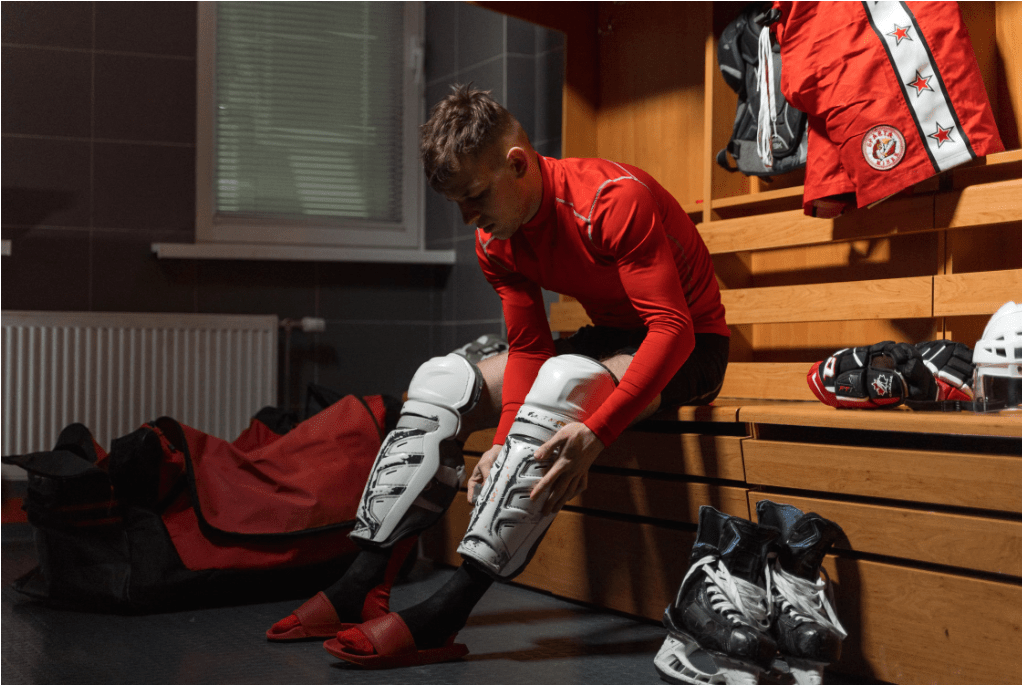
Every hockey player knows the infamous smell of a hockey bag left zipped up overnight. Sweat, moisture, and bacteria trapped in a dark gear bag create the perfect environment for mold, fabric breakdown, and foul odors—a combination often referred to as “hockey stink.”
Caring for your equipment isn’t just about smell; moisture degrades internal protective foams, rusted skate steel loses its sharp edge, and bacteria can cause skin infections like staph. Establishing a proper post-game gear routine protects your investment and extends the lifespan of your pads.
1. The Immediate Post-Game Routine (In the Locker Room)
Caring for your equipment begins the moment you step off the ice before you even pack your bag.
-
Wipe Down Skate Blades: Immediately wipe your skate runners (blades) with a dry cotton cloth or chamois towel to remove melted ice and condensation. Putting wet blades inside soft skate soakers prevents rust from forming on the steel.
-
Unzip Bag Completely: Do not leave your equipment bag tightly zipped during the car ride home. Open the main compartment fully so trapped heat and moisture can begin escaping.
2. Unpacking & Drying Setup (At Home)
The single most important rule of equipment care is unpacking your gear immediately upon returning home. Never leave your bag sitting packed in a warm garage or car trunk.
3. Washing Your Hockey Gear: What’s Machine Safe?
Air drying handles daily moisture, but every few months (or mid-season), your pads require a deep clean to remove built-up sweat salts and bacteria.
Machine-Washable Items (Front-Load Washer Only)
Use a front-loading washing machine or a top-loader without a central agitator on a gentle/delicate cycle with cold water and mild detergent:
-
Shoulder pads, elbow pads, and shin guards
-
Hockey pants (breezers) and gloves
-
Socks, base layers, jerseys, and neck guards
Important: Secure all Velcro straps before placing pads in the washer so they do not tear surrounding fabric liners. Never use bleach or fabric softeners, as they degrade protective technical foams.
Items That Must NEVER Go in the Washer/Dryer
-
Ice Skates: High heat and water ruin skate leather, composite boots, and internal glues.
-
Helmets: Detergents can corrode protective foam adhesives and metal hardware screws. Clean helmets manually with warm water, mild dish soap, and a microfiber cloth.
4. Drying Rules: Air Dry vs. Heat
Rule #1: AIR DRY ONLY
High heat from a clothes dryer will MELT plastic inserts,
WARP internal foams, and SHRINK protective liners!
-
Always Air Dry: Hang all washed pads in a well-ventilated room in front of a fan.
-
Avoid Direct Sun or Radiators: Leaving gear outside under extreme direct sunlight or directly against space heaters bakes composite plastics, causing them to become brittle and crack under impact.
Quick Reference Summary
| Equipment Piece | Daily Drying Method | Deep Cleaning Technique |
| Ice Skates | Wipe steel dry, pull insoles out, air dry at room temp | Wipe boot exterior with damp cloth; replace rusty hardware |
| Gloves & Pads | Hang open on rack with active fan airflow | Front-load washer on cold/delicate cycle with mild soap |
| Helmet | Wipe interior sweat liners dry | Hand wipe with mild soap and water; check screw tightness |
| Base Layers | Wash after every single use | Regular machine wash and low-heat or line dry |