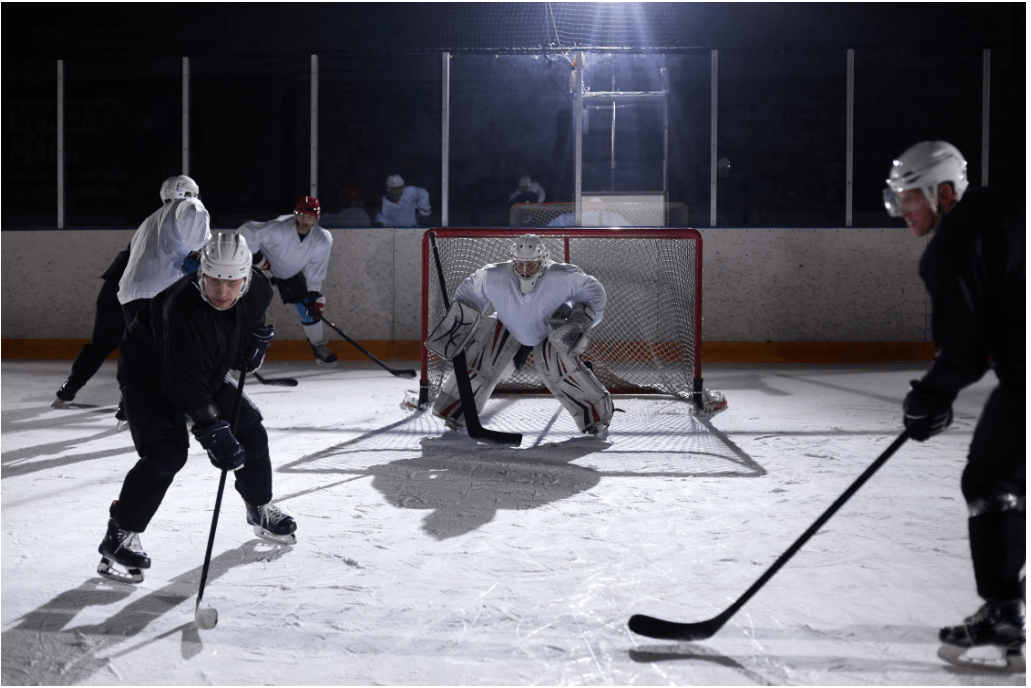
Outfitting a hockey player can cost anywhere from $500 for entry-level gear to over $2,500 for top-tier elite equipment. With top-of-the-line composite sticks priced above $350 and premium skates running over $1,000, it is easy to overspend.
However, paying top dollar across your entire bag is rarely necessary. The key to smart spending is knowing which gear impacts safety, fit, and skill progression—and where mid-tier or entry-level options perform just as well.
Here is a breakdown of where to invest your money and where you can safely cut costs.
The “Splurge” List: Gear Worth Premium Investment
These three items directly impact your safety, skating mechanics, and head protection. Cutting corners here often leads to discomfort, poor performance, or injury.
1. Ice Skates (Spend: High to Premium)
Your skates are your connection to the ice. Premium skates feature lightweight carbon-fiber quarter packages, stiff composite outsoles for maximum power transfer, and heat-moldable liners that eliminate painful pressure points.
The Bauer Supreme Shadow offers a carbon composite boot for maximum stride power.
-
Why spend more: Cheap skates use soft, pliable boot walls that lack lateral ankle support, causing ankle roll and inefficient stride mechanics. High-end skates also feature replaceable runners so you can swap out steel without replacing the entire holder.
2. Helmet (Spend: High)
Your head requires the highest standard of protection. While all certified helmets meet baseline safety requirements, premium models incorporate advanced impact-dispersing materials like 3D-printed fluid structures, D3O smart foam, and tool-free micro-adjustments.
The CCM Tacks 720 Combo Hockey Helmet features multi-layer foam and optimized ventilation for elite comfort.
-
Why spend more: Premium helmets offer significantly better fit customization and multi-directional impact absorption, helping protect against concussions and head trauma.
3. Hockey Stick (Spend: Mid-to-High for Adults; Low for Kids)
A stick’s price tag reflects its weight, balance point, and carbon fiber composition. Elite composite sticks feature ultra-lightweight one-piece construction for faster shot releases.
The Bauer Vapor Flylite Grip Hockey Stick provides an ultra-low kick point engineered for rapid wrist shots.
-
Where to draw the line: Mid-tier sticks ($130–$180) offer 85% of the performance of $350 top-tier sticks, with added durability for recreational players.
The “Save” List: Gear Where Budget Options Excel
For general body protection, entry-level and mid-range options provide ample protection against pucks, sticks, and falling onto the ice.
1. Shoulder Pads and Shin Guards (Spend: Low to Mid)
Unless you are playing high-level contact hockey with slap shots exceeding 80 mph, basic shoulder pads and shin guards offer plenty of foam coverage.
-
Why save: Budget pads are often lighter and less restrictive than heavily armored elite pads, giving recreational players greater freedom of movement.
2. Elbow Pads and Hockey Pants (Spend: Low)
-
Elbow Pads: As long as the cap stays securely over your elbow joint without slipping, an entry-level elbow pad performs its primary job—protecting your joints during a fall.
-
Hockey Pants (Breezers): Mid-tier pants offer thick thigh guards and kidney padding. Paying for top-tier pants mostly gets you lightweight materials designed for pro-stock mobility.
3. Gloves (Spend: Mid)
While $200 elite gloves feature dual-density foam and ultra-soft leather palms, mid-tier gloves ($70–$100) offer plenty of finger dexterity and palm durability for recreational play.
Equipment Investment Matrix
| Equipment | Priority Level | Budget Range | High-End Range | Recommendation |
| Ice Skates | High | $150 – $250 | $700 – $1,100+ | Spend: Buy mid-to-high for fit, support, and durability. |
| Helmet | High | $60 – $90 | $250 – $450+ | Spend: Prioritize proper fit and multi-layer protection. |
| Hockey Stick | Medium-High | $60 – $100 | $300 – $380+ | Target Mid-Tier: Look for $130–$180 sticks for value. |
| Protective Pads | Low-Medium | $100 – $150 (Set) | $400 – $600+ (Set) | Save: Entry-level pads offer complete protection for rec play. |
Smart Buying Strategies
-
Buy Last Year’s Model: Hockey brands operate on 1- to 2-year product cycles. When a new line launches, previous-generation skates and sticks receive heavy markdowns despite having nearly identical technology.
-
Prioritize Fit Over Price: A $1,000 skate that does not fit your foot shape will cause pain and performance loss, while a properly fitted $300 skate will perform far better on the ice.
-
Consider Quality Used Gear: Items like shoulder pads, shin guards, and hockey pants rarely wear out functionally. Buying them second-hand saves significant money that can be redirected toward your helmet or skates.
Summary
Invest your money where it counts most: skates that fit properly, a protective helmet, and a balanced stick. Save money on standard protective pads like shoulder, elbow, and shin guards, where entry-level gear provides all the safety you need.
If you would like, we can explore custom skate fitting options or review the complete gear checklist for new players next. Would you like to proceed with that?